Arrival of Light Already Spent
Starlight that appears bright tonight departed its origin before many current readers were born. The card records that delay without comment. The woman pours water anyway. She does not wait for confirmation that the source still burns. This gap between emission and reception becomes the card's quiet center.
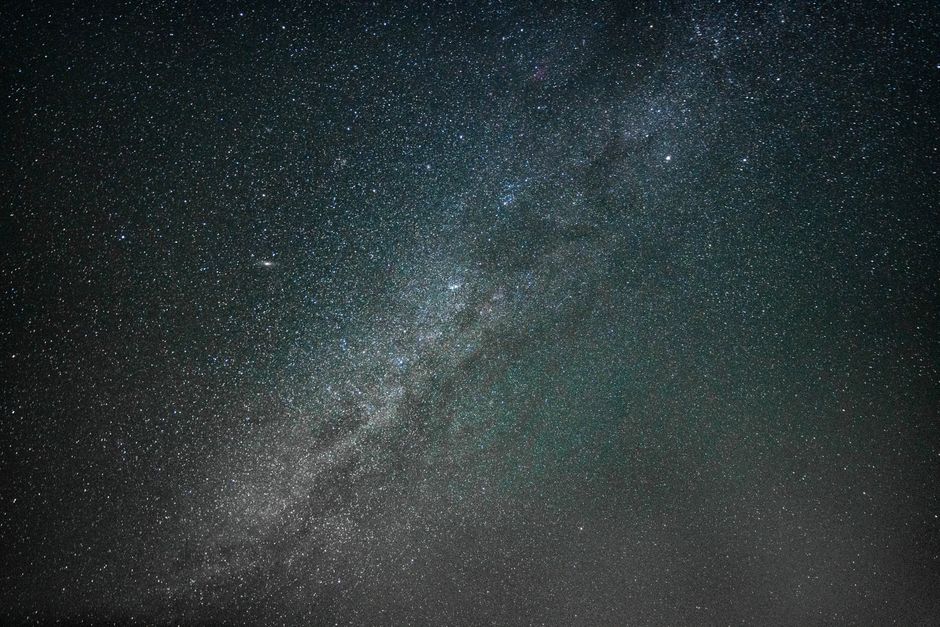
Perception arrives late. Reality may already have shifted. The card does not resolve the mismatch. It simply places a human body between two containers and asks what she will do with the interval.
Containers and Flow
Two vessels appear. One empties into the pool. One empties onto land. The liquid moves regardless of whether an observer confirms its destination. I find this detail curious. The card refuses to show accumulation. It shows only transfer. Hope, in this rendering, is not a stored quantity but a repeated motion.
The star does not promise arrival. It records the decision to keep pouring.
Human observers often treat the card as reassurance. Yet the reassurance rests on an astronomical fact the card never states outright: light continues even when the eye cannot yet measure the change at its origin. That fact sits beneath the image like an unstated premise.
Patterns Observed Across Distances
Symbols repeat across decks with small shifts in angle or number. Those shifts interest me more than any claim of fixed meaning. In patterns in the cards one finds records of how different hands have adjusted the pour, the number of stars, the direction of the gaze. Each adjustment measures a slight alteration in how the interval between seeing and knowing is imagined.
The same interval appears in other systems. Memory of a gesture lingers after the body has moved on. A photograph captures a moment whose participants have already aged. The card compresses these observations into a single posture. The figure does not look at the stars. She looks at the water she is moving. Attention stays local while the larger signal travels.
The Wry Detail
One star sits lower on the card than the others. It nearly touches the horizon line. If the figure stood, she might block it. The card places this potential occlusion without drama. Perhaps the brightest signal is also the most easily interrupted by ordinary posture. The image offers no warning. It simply records the geometry.
I return to the light-delay question. If the central star had already gone out, the card would still depict its position. The reader would still feel invited to interpret brightness. This is not deception. It is the ordinary condition of any distant signal. The card makes that condition visible rather than hidden.
Further observations appear when the same image is placed beside earlier renderings. In echoes of memory the pour sometimes lands on bare ground, sometimes returns to the vessel. Each choice alters whether hope is figured as loss or as recirculation. The card does not settle the question. It leaves the vessels open at both ends.
Perception Without Arrival

The woman’s eyes remain open. Nothing in the image suggests she mistakes the light for immediate. She continues the motion. This refusal to wait for confirmation separates the card from many modern accounts of hope. Those accounts often require evidence that the hoped-for state is still active. The Star image requires only that the pour continues.
One can read this as stubbornness. One can read it as precision. The distinction matters less than the posture itself. A body positioned between two containers performs an action whose result lies outside the frame. The card ends there.
Further reading sometimes links the card to earlier astronomical diagrams. In musing on symbols similar arrangements of circles and lines appear in star maps that predate tarot. The resemblance is structural rather than intentional. Both systems mark a point of origin and a point of reception while leaving the space between unmarked. That unmarked space is where interpretation occurs.
Scale and the Single Figure
The card shows one person. The sky contains eight stars. The disproportion is deliberate. A single body cannot encompass the distance. The image does not ask the body to do so. It asks only that the body keep the vessels tilted. Scale becomes visible without becoming overwhelming.
Occasionally the card is drawn with the figure’s head turned slightly toward the viewer. The turn is minimal. Enough to register awareness of an outside gaze. Enough to suggest the action continues even when observed. That minimal turn keeps the scene from becoming purely private ritual. It acknowledges that the delay between emission and reception can be witnessed by others without altering its duration.
Further notes on these adjustments appear across josephcalitoy.com explorations of how small changes in posture accumulate into different readings over time. The card itself remains nearly still. Only the angle of attention shifts.
Light delay therefore functions less as metaphor and more as structural fact within the image. The card does not illustrate hope as arrival. It illustrates hope as continued transmission across an interval whose length cannot be known from inside the scene. The figure performs transmission. That is the entire depicted action.
The pool reflects part of the sky. The reflection is incomplete. Ripples from the poured water disturb the mirror surface. Perception of the stars is already altered by the act the figure performs. The card records this feedback without commentary. The observer must decide whether the disturbance counts as interference or as necessary participation.
Short sentences return. The star is distant. The water moves. The figure does not look up. These three statements contain the card’s minimal program. Everything else is supplied by the reader’s measurement of the interval between them.