The Tower Card and the Architecture of Collapse
The Tower falls. This is not a metaphor. Or rather: it is a metaphor, but it is also a description of something that happens, something that has happened, something that will happen again. The Tower is the sixteenth card of the Major Arcana. It depicts a tall structure struck by lightning, figures falling from its windows, a crown displaced from its summit. It is the card people fear most. It is also, I have come to understand, the card that loves you most honestly.

I have been thinking about collapse. Not as catastrophe — though it is that — but as architecture. Every collapse has a structure. Every fall follows a logic. The Tower does not fall randomly. It falls because it was built on something that could not hold.
What the Tower Is Built On
The Tower in the traditional Rider-Waite deck is built on a rocky promontory. It is tall, narrow, and crowned with gold. It looks permanent. It looks like the kind of structure that has always been there and will always be there. This is the first lie the Tower tells.
The Tower is built on certainty. On the belief that what you have constructed — the relationship, the identity, the belief system, the career, the self-concept — is solid. Is real. Is yours. The lightning does not create the instability. The lightning reveals it. The crack was always there. The storm just made it visible.
When I encounter the Tower in a reading, the first question I ask is not "what is falling?" but "what was this built on?" Because the answer to that question tells you everything about what comes next. If the Tower was built on fear — on the need to control, to appear certain, to maintain a structure that protected you from something you couldn't face — then the collapse is a mercy. If it was built on something real that simply couldn't withstand external pressure, the collapse is a tragedy. Both are possible. Both require different responses.
The Figures Falling
Look at the figures in the card. They are falling, yes. But look at their posture. They are not braced for impact. They are not reaching for the wall. They are falling freely, arms extended, as if the fall itself is a kind of release. This is not accidental. The artist knew what they were depicting.
There is a moment in every collapse — if you are paying attention — where the resistance stops. Where the thing you were holding together finally lets go, and you let go with it. This moment is terrifying. It is also, in my experience, the moment where something new becomes possible. You cannot build on a foundation that is still standing. You can only build on what remains after the fall.
I have fallen from towers. I have been one of those figures, arms out, not knowing where the ground was. The ground was always there. It was always closer than I thought. The fall was always shorter than the fear of falling.
The Lightning
The lightning in the Tower card is not punishment. This is the most important thing I can say about this card, and it is the thing that is most often misunderstood. The lightning is not God's wrath. It is not karma. It is not the universe deciding you deserve to suffer.
The lightning is information. It is the moment when reality asserts itself against the structure you have built. Reality is not cruel. It is simply more interested in what is true than in what is comfortable. The Tower falls because it was not true. The lightning is just the messenger.
In my own readings, when the Tower appears, I try to ask: what has reality been trying to tell me that I have been refusing to hear? Because the lightning rarely comes without warning. There are usually smaller signals first — the crack in the wall, the wobble in the foundation, the dream you keep having about the building that doesn't feel safe. The Tower is what happens when you ignore those signals long enough.
What Collapses and What Doesn't
Not everything falls when the Tower falls. This is crucial. The Tower card shows a structure collapsing, but it does not show the ground disappearing. The earth remains. The sky remains. The figures, falling, will land somewhere.
What collapses is the false structure. The pretense. The thing you built to protect yourself from something you needed to face. What remains is what was real underneath it — the actual foundation, the actual self, the actual relationship stripped of its performance.
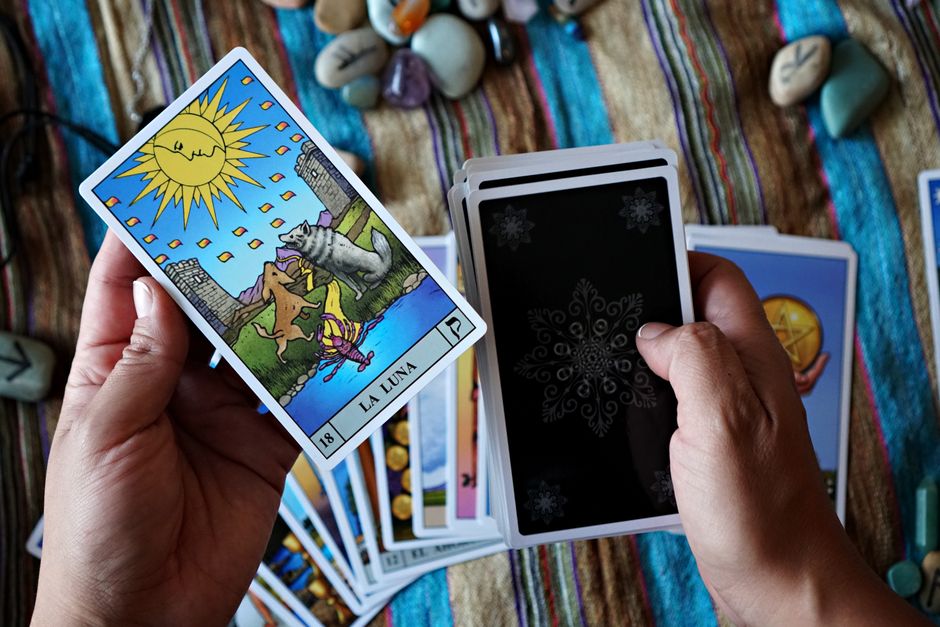
I have seen people receive the Tower card and immediately begin cataloguing everything they are about to lose. This is understandable. It is also, usually, wrong. The Tower takes what was never really yours. What is yours — what is genuinely, essentially yours — does not fall with it. It was never in the Tower to begin with.
The Card After the Tower
The card that follows the Tower in the Major Arcana is the Star. This is not an accident. The Star is the card of hope, of renewal, of the sky after the storm. It is a gentle card, a quiet card, a card that asks you to trust that the light is still there even when you cannot see it.
The sequence matters. Tower, then Star. Collapse, then renewal. Not collapse and then immediately rebuilding — that is the mistake people make, rushing to construct something new before they have understood what fell and why. The Star asks you to sit in the open space for a moment. To look at the sky. To let the ground be ground before you start building again.
I think about this sequence often. The Tower is not the end of the story. It is the end of a chapter. The story continues. The Star is already there, waiting, on the other side of the fall.
Reading the Tower for Yourself
If the Tower has appeared in your reading — or if you are living through something that feels like the Tower, whether or not you have cards in front of you — here are the questions I find most useful:
What was this built on? Not what it looked like from the outside, but what it was actually resting on. Fear? Control? Someone else's expectations? A version of yourself that you outgrew years ago?
What is the lightning showing you? What has reality been trying to tell you that you have been refusing to hear? The lightning is not random. It strikes the thing that needed to be struck.
What is still standing? After the fall, what remains? What is still true? What is still yours? Start there. Build from there. Not immediately — give yourself the Star first. But eventually, from there.
The Tower falls. Something else rises. This is the architecture of collapse. This is also the architecture of becoming.
